

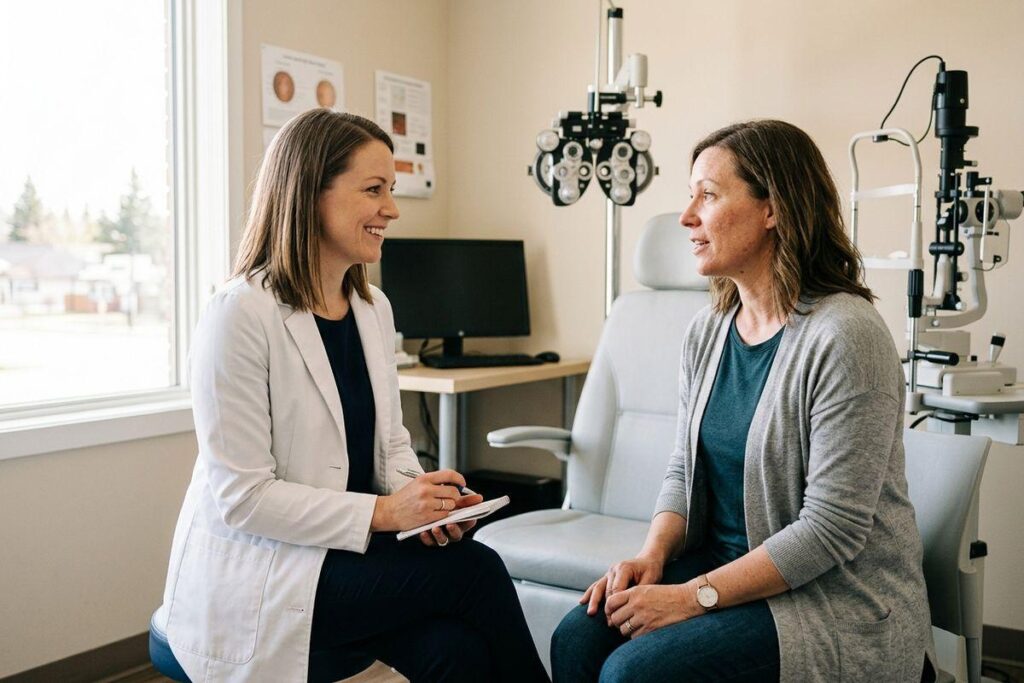
An eye appointment used to mean reading a chart on the wall, clicking through a few lenses, and leaving with a prescription slip. That tells you how well you see today. It says very little about the health of your eyes.
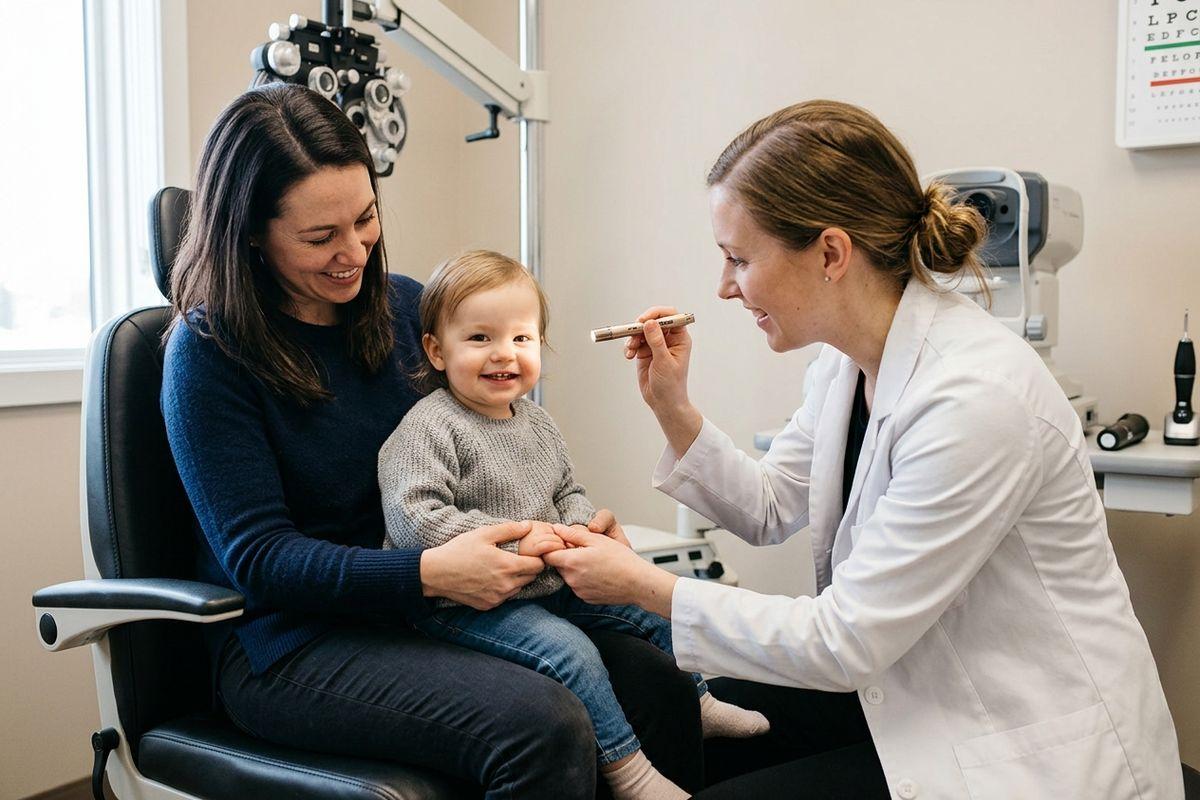
A comprehensive eye exam looks at your vision and your eye health together, covering everything from how your eyes work as a pair to what the tissue at the back of each one looks like. Set aside 45 to 90 minutes, whether you’re booking an exam for yourself or a first visit for your little one.
Comprehensive Eye Exam vs. Sight Test
A sight test measures lens power and stops there. It’s often automated, so a machine produces the number that goes on a glasses prescription.
Nobody examines the health of your eyes during one. Pressure readings, side vision, and the tissue inside the eye go unchecked, which is why a refraction on its own can’t diagnose an eye or vision problem.
Why School Checks Can Miss Things
Screenings at school test distance vision with basic equipment and a few minutes per student. A child who reads the far chart without trouble may still struggle to focus on a worksheet at arm’s length.
Focusing and eye teaming rarely get tested at all, and neither does eye health. Passing a screening doesn’t rule out a problem, so a full exam still belongs on the calendar.
What Happens During a Comprehensive Eye Exam
The visit opens with a conversation. Your optometrist will ask what medications you take and whether eye conditions run in your family. Long stretches in front of a screen come up too, since they can leave you with tired, irritated eyes by mid-afternoon.
Then come the vision tests. You’ll read an eye chart, and a refraction narrows down your prescription. Your optometrist also watches how your eyes move, how well they work as a team, and how you judge distance.
After that, we turn to eye health. Measuring the pressure inside each eye takes only a moment, and a side vision test maps what you notice out of the corners of your eyes without turning your head.
Your optometrist then examines the front and back of each eye up close. They may use dilating drops to widen your pupils first, giving a clearer view of the retina and optic nerve.
How to Get Ready for Your Eye Exam
A few minutes of preparation can make the appointment run more smoothly. Bring these along:
- The glasses you wear now, even if the prescription is years old
- Your contact lenses and the packaging they came in
- Your insurance information for direct billing
- Any questions you’ve been meaning to ask
- Sunglasses in case your eyes are dilated, since bright light can feel uncomfortable afterward
What an Eye Exam Can Reveal About Your Health
The inside of your eye offers a direct view of blood vessels and nerve tissue. The rest of a physical can’t show either one without special imaging.
Your optometrist may spot early signs of glaucoma, cataracts, or macular degeneration and start managing the condition from there. Diabetes and high blood pressure can leave their own marks on the retina.
Plenty of these conditions cause no symptoms for years. You can see perfectly well and still have something worth watching, so regular visits matter more than waiting for a change you can feel.
How Often You and Your Family Need an Eye Exam
Age is one of the primary things that shape your exam schedule. Recommended intervals for healthy eyes look like this:
- A first exam between 6 and 9 months of age
- One exam somewhere between ages 2 and 5
- Yearly exams from age 6 through 19
- An exam every 2 years between 20 and 64
- Yearly exams once you turn 65
Growing eyes change quickly, and nearsightedness that starts in childhood tends to progress year over year. Myopia management can slow that progression while a prescription is still settling.
Living with diabetes changes the timeline too. A yearly diabetic eye exam closely examines the retina, where high blood sugar often shows its earliest signs.
Signs to Book an Eye Exam Sooner
Some changes shouldn’t wait for the next scheduled appointment. Call your optometrist if you notice any of these:
- Headaches that build through the afternoon
- Squinting or frequent eye rubbing
- Losing your place on the page while reading
- One eye turning in or out
- Sudden vision changes, eye pain, or flashes and floaters
Book Your Family’s Next Exam
Maybe it’s your baby’s first appointment, a checkup before the school year starts, or a visit you’ve been putting off since your last prescription. Diamond Valley Vision Care can help with all of it. Book your comprehensive eye exam and find out how your eyes are doing.